

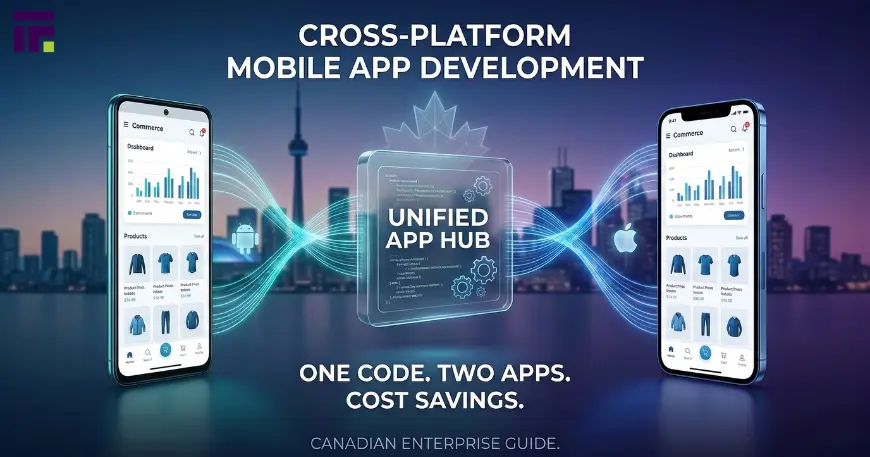
Building a mobile app is a big step for any business in Canada. You want to reach people on their iPhones and their Android phones. In the past, you had to build two separate apps. This was very expensive and took a long time.
Today, things are different. We use cross-platform mobile app development to make things easier. This means we write the code one time, and it works on both types of phones. In this guide, we will look at how this helps you save money as part of a broader digital transformation strategy. We will also talk about the small trade-offs in how the app feels and moves.
What is Cross-Platform Mobile App Development?
If you are wondering what cross platform is, it is quite simple. It is a way to build a mobile app that can run on many systems using a single set of code.
Think of it like a universal remote. Instead of having one remote for the TV and one for the DVD player, you have one remote that talks to both. In the world of apps, multi platform app development allows developers to create one “master” version of the app. Then, they use special tools to make it work on Apple (iOS) and Android. This is different from “Native” development, where you have to build the same app twice. Understanding the full mobile app development lifecycle is essential to seeing how these two methods differ in speed and testing.
Why Canadian Businesses Choose Multi Platform App Development
Canada has a very diverse market. Some people love their Samsung phones, while others only use iPhones. If you only build for one, you miss half of your customers. For a business in a city like Toronto or Vancouver, you want to reach everyone at once.
Best cross platform app development methods allow local businesses to launch faster. Whether you are a small startup or a big shop, getting your app out quickly is key to winning. It lets you test your ideas without spending all your money at the start.
The Big Benefits: Cost Savings
The most popular reason to choose this path is the budget. Building apps can be pricey. Here is how cross-platform helps your wallet:
1. One Team Instead of Two
When you build native apps, you need a team for Android and a team for Apple. With cross-platform mobile app development, you only need one team. You do not have to pay for two different groups of experts. This cuts your hiring costs in half.
2. Faster Time to Market
Writing code once is much faster than writing it twice. This means your app gets into the App Store and Google Play Store much sooner. In the business world, being first can be very important.
3. Easier Updates
Imagine you want to change a button color or add a new feature. With two native apps, you have to do the work twice. With a cross-platform app, you change it once. The update goes out to everyone at the same time. This keeps your costs low even after the app is finished.
Understanding Mobile App Development Frameworks
To build these apps, developers use mobile app development frameworks. These are sets of tools that act as a foundation. They help the code talk to the phone hardware.
Popular Tools for Development
Some of the most famous ones include:
- React Native: Created by Meta. It is very popular and feels very smooth.
- Flutter: Created by Google. It is known for looking beautiful and working fast.
- Kotlin Multiplatform: This is a newer way to share logic while keeping things very fast.
- MAUI: A tool from Microsoft that is great for businesses already using Windows tools.
Using the best cross platform app development tools ensures that your app does not feel “cheap” or slow. It makes the app look professional.
Performance Trade-offs: What You Need to Know
While saving money is great, there are some things you should think about. No tool is perfect. When you do not build “native” apps, there are small trade-offs.
Speed and Smoothness
Native apps are built specifically for the phone hardware. Cross-platform apps have a “middle man” layer. This can sometimes make the app feel a tiny bit slower. For a basic store or a news app, you will not notice. But for a very heavy game, native might still be better.
Access to Phone Features
Sometimes, a brand new feature comes out on the newest iPhone. Native apps can use it on day one. Cross-platform tools might take a few weeks or months to update. If you need the absolute newest technology the second it comes out, this is something to keep in mind.
Battery Usage
Because the phone has to do a little extra work to “translate” the code, it might use a tiny bit more battery. Again, for most apps, this is a very small difference that most people will never see.
Is Cross-Platform Right for Your Project?
Most Canadian companies find that the pros outweigh the cons. If you want a high-quality app without spending a fortune, this is the way to go. It is perfect for many types of projects.
Great Use Cases
- Online stores and E-commerce.
- Business tools for employees to use at work.
- Social media apps for connecting people.
- Information and booking apps for services.
If you are looking for expert help, check out our custom software development services to see how we can build your dream app.
How to Pick the Best Strategy
Choosing how to build your app is a big choice. You should look at your goals. Do you need it to be the fastest game in the world? Or do you need it to work well for many people on a budget? You can learn more about different ways to build things by reading about the best software development methodologies. This will help you understand the steps we take to make your project a success.
Comparing Native vs. Cross-Platform
Let us look at a quick comparison to make it easy to see the difference.
Native Development
- Pros: Best performance, full access to features.
- Cons: Very expensive, takes twice as long, hard to update.
Cross-Platform Development
- Pros: Saves money, fast to launch, one code to fix.
- Cons: Small performance gap, waiting for new feature updates.
For 90 percent of businesses in Canada, the second choice is the winner. It allows you to test your ideas without losing too much money.
Common Myths About Cross-Platform Apps
Some people say that these apps look “ugly” or do not work well. That is not true anymore. Modern tools allow us to make apps that look exactly like native apps. Most users will never know the difference. They will just see a great app that works on their phone.
Tips for Success in App Development
Focus on the User
Make sure the app is easy to use. If it is too hard to understand, people will not use it. Keep your buttons large and your text easy to read.
Test on Many Phones
Since it is for many platforms, test it on old and new phones. Test it on a cheap Android and a brand new iPhone to make sure it looks good for every Canadian customer.
Keep it Simple
Do not add too many features at once. Start with what is most important. You can always add more things later once you see what people like.
Conclusion
Cross-platform mobile app development is changing how we build software in Canada. It makes it easier for small and large businesses to have a presence on every phone. While there are some small trade-offs in performance, the savings in cost and time are usually worth it.
By using the right mobile app development frameworks, you can create a beautiful app that your customers will love. Are you ready to start your journey? We are here to help you every step of the way. Let us build something amazing together! Contact us today to learn how our expert team can bring your app idea to life with the best modern tools.
Frequently Asked Questions
What is an example of a cross-application platform?
A great example is Flutter. It is a tool made by Google. Developers use it to write one set of code. That code then turns into an app for Android phones, iPhones, and even web browsers. Many famous apps like Hamilton and Alibaba use these kinds of tools.
What is the main advantage of a cross application platform?
The biggest plus is saving money and time. You only have to write and fix one version of your code. This helps businesses get their products to customers much faster than building two separate apps.
Are cross platforms good for mobile apps?
Yes, it is excellent for most mobile apps. Unless you are building a very high-end 3D game or an app that needs very deep access to the phone hardware, cross-platform is usually the smartest choice. It provides a great balance of cost and quality.

