

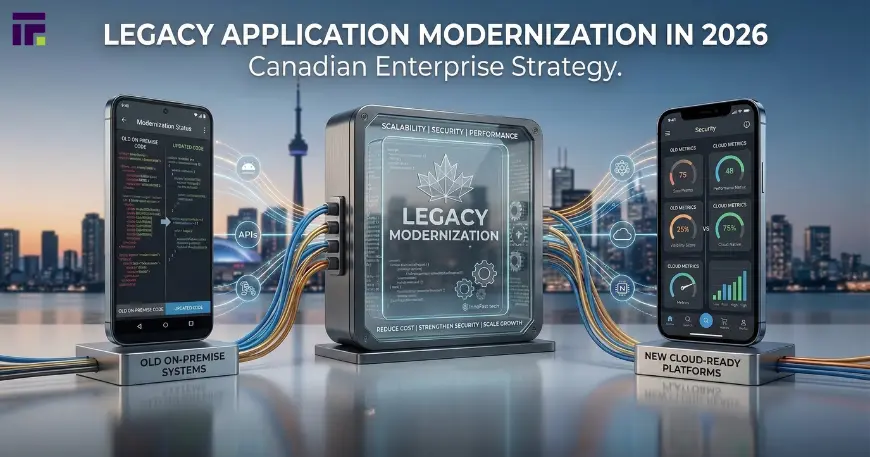
Legacy application modernization in 2026 is the process of upgrading outdated software systems to improve scalability, security, performance, and integration. Legacy systems are older applications built on outdated technologies that still run critical business operations but limit growth and innovation.
Organizations modernize legacy systems to reduce maintenance costs, eliminate security risks, improve user experience, and enable cloud adoption. Common legacy application modernization strategies include rehosting, replatforming, refactoring, rebuilding, and replacing applications.
A successful modernization strategy starts with application assessment, technical debt evaluation, and clear business objectives. Most enterprises prefer an incremental modernization approach to reduce risk and avoid operational disruption.
With structured planning and the right technical expertise, companies can transform legacy infrastructure into scalable, cloud-ready platforms.
Innofast.tech helps businesses modernize legacy systems through strategic assessment, cloud migration, architecture redesign, and performance optimization, enabling long-term digital growth and operational efficiency.
What Are Legacy Systems
To understand modernisation, you must first understand what legacy systems are.
A legacy system is an older software application, platform, or infrastructure that continues to operate despite being built on outdated technologies. These systems often support core operations such as finance, supply chain, or customer management.
Legacy Application Meaning
The legacy application meaning refers to software that:
- Uses outdated programming languages
• Runs on on-premises infrastructure
• Has monolithic architecture
• Lacks integration capabilities
• Requires specialized maintenance skills
Legacy applications are not necessarily broken. The issue is that they limit growth, scalability, and innovation.
Why Legacy Application Modernization Is Important in 2026
Rising Maintenance Costs
Maintaining legacy systems is expensive. Older platforms require constant monitoring, custom fixes, and specialised engineers. As vendor support ends, internal teams must handle updates and security patches on their own.
Costs increase due to:
- Infrastructure upgrades
• Hardware replacement
• Technical debt accumulation
• Long development cycles
Modernising legacy applications reduces long-term operational expense.
Security and Compliance Risks
Outdated systems create vulnerabilities. Unsupported software does not receive regular security updates, making it easier for attackers to exploit weaknesses.
Modernisation improves:
- Data encryption standards
• Identity and access management
• Compliance with regulations
• Continuous monitoring
For regulated industries, legacy system modernisation is critical for meeting compliance requirements.
Limited Scalability and Performance
Legacy applications were designed for predictable workloads. Today’s digital environment demands flexible infrastructure that can scale automatically.
Common limitations include:
- Performance bottlenecks
• Slow response times
• Inability to handle peak traffic
• Downtime during updates
Modern infrastructure allows elastic scaling and better system reliability.
Poor User Experience
Modern customers expect seamless digital experiences across devices. Many legacy systems have outdated interfaces that reduce engagement and productivity.
Modernisation enables:
- Mobile-friendly design
• Faster load times
• Improved usability
• Consistent customer experience
Key Benefits of Legacy Application Modernization
A structured modernisation initiative delivers measurable business value.
Improved agility
Modern platforms allow faster feature development and shorter release cycles.
Lower operational cost
Cloud infrastructure reduces hardware expense and maintenance burden.
Stronger security
Updated frameworks improve protection against cyber threats.
Better scalability
Systems can scale automatically based on demand.
Improved integration
API-based architecture connects easily with third-party tools.
Innovation enablement
Organisations can adopt artificial intelligence, automation, and advanced analytics.
Competitive advantage
Faster innovation improves market responsiveness.
How to Build a Legacy Application Modernization Strategy
Modernisation requires careful planning and alignment with business objectives.
Step 1: Application Assessment
Start with a full inventory of applications. Evaluate each system based on:
- Business importance
• Technical complexity
• Risk exposure
• Maintenance cost
This assessment identifies modernisation priorities.
Step 2: Evaluate Technical Debt
Technical debt represents shortcuts taken during development that now create inefficiencies.
Review:
- Code quality
• Infrastructure dependencies
• Security gaps
• Integration challenges
Understanding technical debt helps determine the right modernisation path.
Step 3: Define Business Goals
Modernisation should support clear business outcomes, such as:
- Cost reduction
• Digital transformation
• Customer experience improvement
• Operational efficiency
• Compliance enhancement
Technology decisions must align with strategic goals.
Step 4: Create a Roadmap
Develop a structured plan including:
- Timeline
• Budget
• Key milestones
• Risk management strategy
• Success metrics
A phased roadmap reduces disruption.
Legacy Application Modernization Strategies
There are five primary legacy application modernisation strategies.
Rehosting
Rehosting moves applications to the cloud with minimal changes.
Best for organisations needing quick migration.
Low initial complexity but limited long-term optimisation.
Replatforming
Replatforming includes minor improvements during migration, such as moving databases to managed services.
Provides better scalability without major redesign.
Refactoring
Refactoring restructures application code to improve performance and maintainability. Often includes breaking monolithic systems into microservices.
Ideal for long-term growth and scalability.
Rebuilding
Rebuilding involves rewriting the application using modern frameworks.
Suitable when the existing codebase is too outdated to improve.
Replacing
Replacing removes the legacy application and introduces a commercial solution such as software as a service.
Best for non-core systems.
Each strategy varies in cost, speed, and risk.
Big Bang Versus Incremental Modernization
Organisations must decide how to implement modernisation.
Big Bang Approach
Complete system replacement at once.
Faster transformation.
Higher risk and greater operational disruption.
Incremental Approach
Gradual updates while keeping systems operational.
Lower risk.
Better change management.
Preferred by most enterprises in 2026.
Incremental modernisation allows continuous improvement without business interruption.
Technologies Driving Modernization in 2026
Several technologies support effective modernisation.
Cloud computing
Provides scalable and flexible infrastructure.
Microservices architecture
Breaks large systems into independent services.
Containerization
Improves portability and deployment consistency.
DevOps and continuous integration
Accelerates development cycles.
Artificial intelligence
Assists in code analysis and performance monitoring.
API-first development
Improves integration and interoperability.
These technologies help modernised systems remain future-ready.
Common Challenges in Legacy System Modernization
Modernisation is complex and may face challenges.
Data migration risk
Moving large volumes of data can create inconsistencies.
Integration complexity
Legacy systems may rely on undocumented dependencies.
Organizational resistance
Teams may resist change.
Budget constraints
Initial investment may appear high.
Downtime concerns
System outages can disrupt operations.
How to Address These Challenges
- Use phased migration
• Implement strong governance
• Train teams early
• Maintain executive sponsorship
• Monitor performance continuously
Clear communication reduces resistance and ensures alignment.
Measuring Modernization Success
Tracking measurable outcomes ensures return on investment.
Important performance indicators include:
- Reduced infrastructure cost
• Increased deployment frequency
• Lower downtime
• Improved security posture
• Faster time to market
• Higher customer satisfaction
Modernisation should improve both technical and financial performance.
Cloud migration is not mandatory, but it significantly enhances scalability and flexibility.
Take the Next Step Toward Modernization
Conclusion
Legacy application modernization in 2026 is no longer optional for growth-focused organizations. Legacy systems may still function, but they increase maintenance costs, create security risks, limit scalability, and slow innovation.
A structured modernization strategy helps businesses improve performance, strengthen security, reduce operational expenses, and enable cloud adoption. Whether through rehosting, refactoring, rebuilding, or replacing, the right approach depends on business goals, technical complexity, and long-term vision.
Incremental modernization is often the most practical path, allowing companies to reduce risk while maintaining operational continuity.
By partnering with experienced technology teams like Innofast.tech, organizations can transform outdated systems into scalable, secure, and future-ready platforms that support sustainable digital transformation and long-term competitive advantage.
Frequently Asked Questions
What is meant by legacy applications?
Legacy applications are older software systems built on outdated technology that are still used to run business operations. They often lack scalability, security, and integration with modern platforms.
What is an example of application modernization?
An example of application modernization is moving an on-premises legacy system to the cloud and updating its architecture to microservices to improve performance and flexibility.
Is replacing a legacy system worth it?
Replacing a legacy system is worth it when maintenance costs rise, security risks increase, and the system slows business growth. In some cases, upgrading the existing system is more cost-effective than full replacement.
What are the goals of application modernization?
The main goals are to improve performance, strengthen security, reduce operational costs, enable cloud adoption, and support long-term business growth.
What are common legacy application modernization strategies?
Common strategies include rehosting to the cloud, refactoring code, replatforming to modern infrastructure, rebuilding the application, or replacing it with a SaaS solution.
How do you know if a system is considered legacy?
A system is considered legacy if it relies on outdated technology, lacks vendor support, is difficult to maintain, or cannot integrate with modern tools and platforms.

